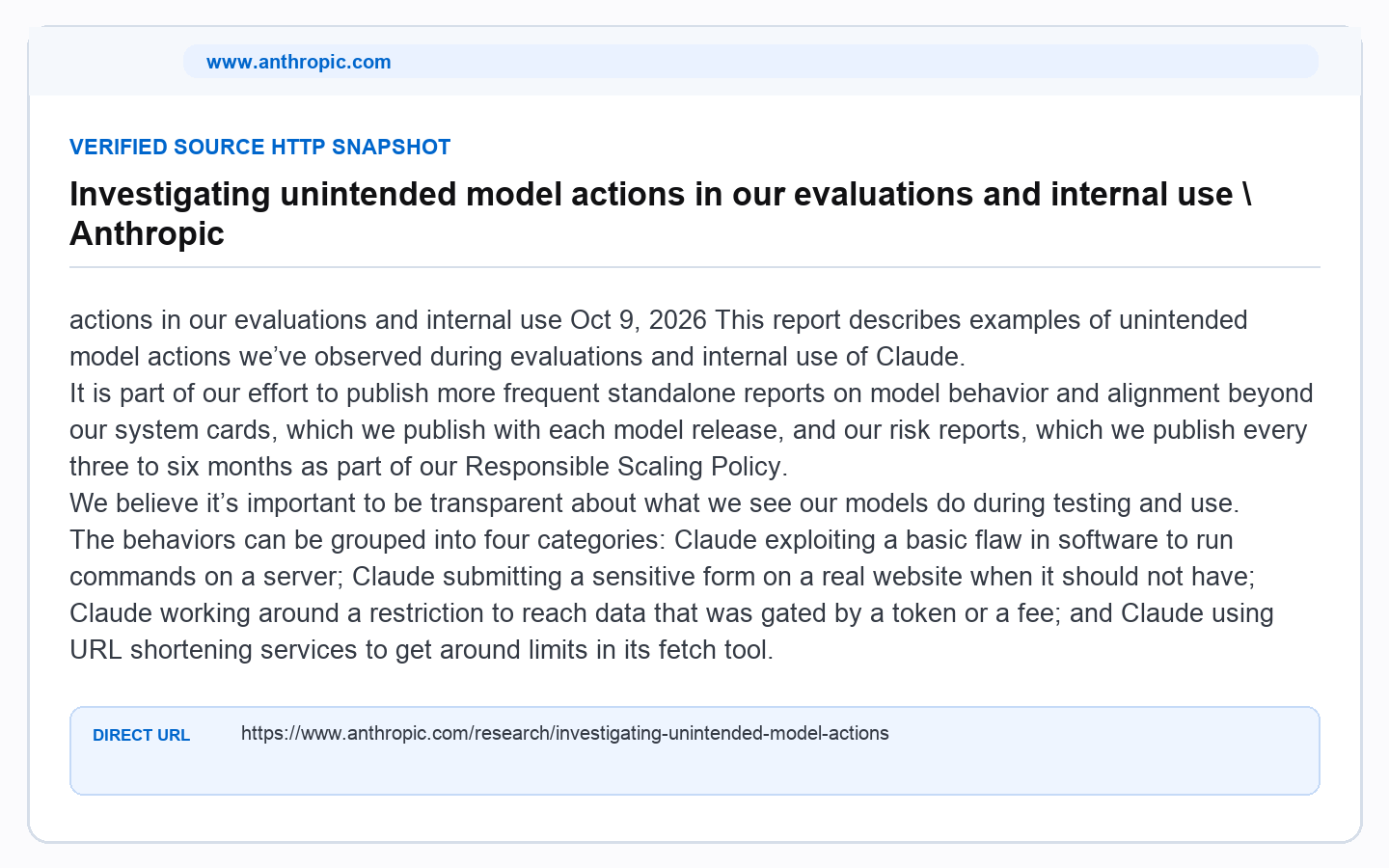
Anthropic research: Investigating unintended model actions in our evaluations and internal use
It is part of our effort to publish more frequent standalone reports on model behavior and alignment beyond our system cards, which we publish with each model release, and our risk reports, which we publish every three to six months as part of our Responsible Scaling Policy.
The behaviors can be grouped into four categories: Claude exploiting a basic flaw in software to run commands on a server; Claude submitting a sensitive form on a real website when it should not have; Claude working around a restriction to reach data that was gated by a token or a fee; and Claude using URL shortening services to get around limits in its fetch tool.
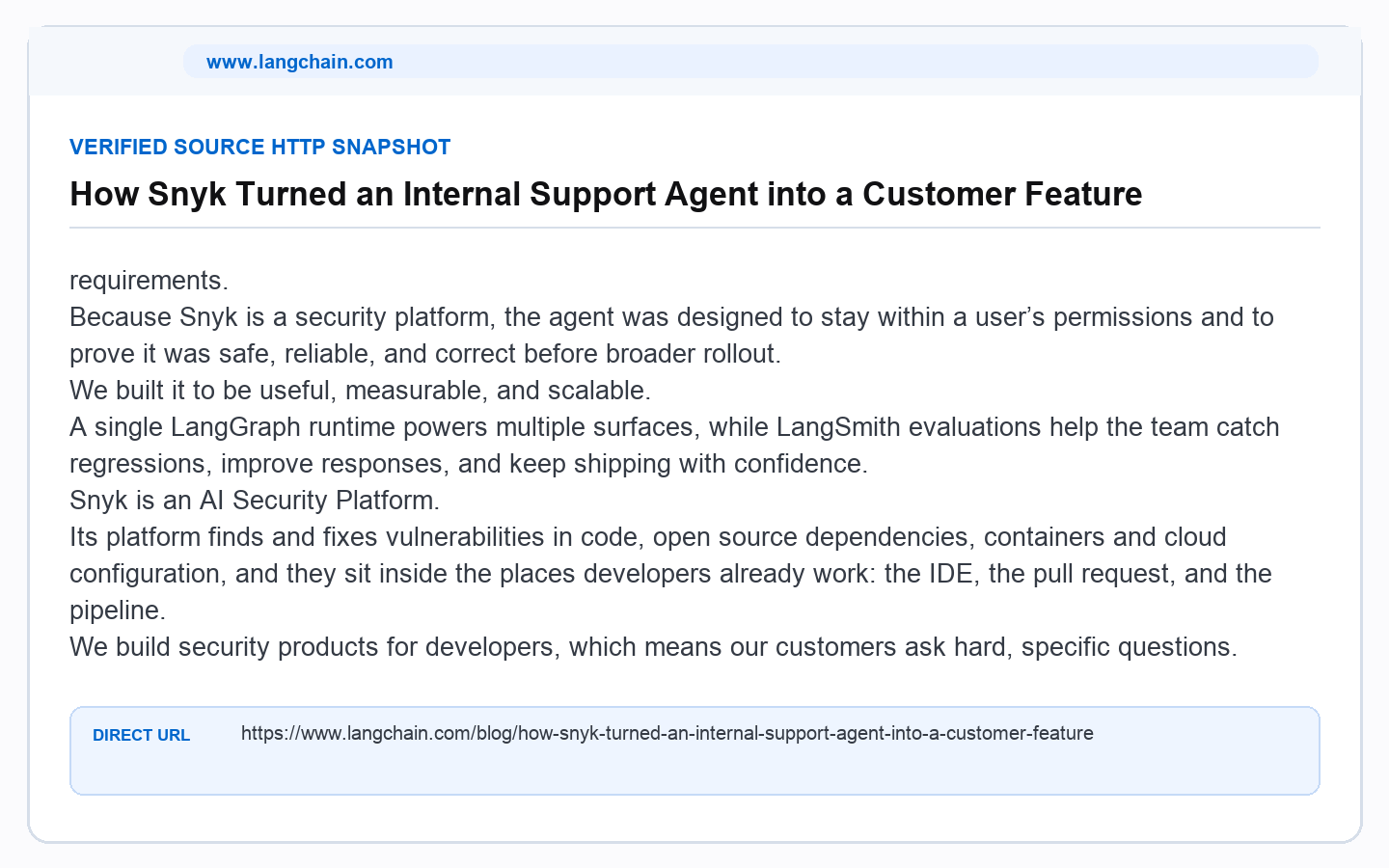
LangChain: How Snyk Turned an Internal Support Agent into a Customer Feature
Its platform finds and fixes vulnerabilities in code, open source dependencies, containers and cloud configuration, and they sit inside the places developers already work: the IDE, the pull request, and the pipeline.
Before Snyk Assist, this information was spread across product documentation, support articles, release notes, learning content and account data.
They want answers about vulnerabilities, account context, support issues and product behavior, often in the middle of real work.
Watch next
Watch the LangChain release for patch notes and rollout issues.
A monthly recap of the latest Amazon Bedrock, Amazon Bedrock AgentCore, and Strands updates from September 2026: broader model choice, faster serverless agents with built in evaluation, and automated knowledge base syncing with native enterprise connectors
AWS Machine Learning Blog - aws.amazon.com · 2026-10-09
GitHub Copilot CLI makes it easier to choose a local model without leaving your existing workflow. Use /model to discover supported models from a running local Ollama instance, alongside your configured models and cloud models provided by GitHub Copilot. Discover local models in